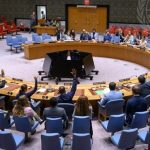
1950s – Transition Toward Independence
-
1950: The United Nations places the former Italian Somaliland under trusteeship, administered by Italy, paving the way for eventual independence.
-
1956: The first Somali Legislative Assembly is formed, increasing local political participation.
-
1958–1959: Political parties grow, and Somali nationalist movements gain popular support across regions including Mogadishu and Hargeisa.
1960s – Independence & Early Democracy
-
1 July 1960: The State of Somaliland (British protectorate) and the Trust Territory of Somalia (Italian-administered) unite to form the Somali Republic.
-
1960–1967: A democratic system develops; multiple governments come to power through parliamentary elections.
-
1967: Abdirashid Ali Sharmarke becomes President.
-
1969: President Sharmarke is assassinated; weeks later, the military seizes power in a bloodless coup led by Mohamed Siad Barre.
1970s – Government Consolidation & Conflict
-
Early 1970s: Somalia adopts “Scientific Socialism,” nationalizing industries and promoting literacy campaigns.
-
1977–1978: The Ogaden War between Somalia and Ethiopia erupts, leading to major humanitarian and economic consequences.
-
Late 1970s: Growing internal repression and economic decline spark resistance movements.
1980s – Rising Tensions and Rebellion
-
1981: Opposition groups form in various regions, including in the north near Hargeisa.
-
1988: Civil war intensifies; northern cities suffer heavy bombardment.
-
Late 1980s: The central government loses control over large parts of the country.
1990s – State Collapse & Humanitarian Crisis
-
1991: The central government collapses. Somaliland declares independence (not internationally recognized).
-
1992: Severe famine leads to the deployment of UN peacekeeping forces under UNOSOM and later UNITAF.
-
1993: The “Black Hawk Down” incident occurs in Mogadishu, leading to US withdrawal.
-
1998: The Puntland region declares itself an autonomous state (within federal Somalia).
2000s – Attempts at Governance & Ongoing Conflict
-
2000: A Transitional National Government is formed in Djibouti.
-
2004: The Transitional Federal Government (TFG) is created.
-
2006: The Islamic Courts Union (ICU) briefly takes control of Mogadishu, leading to conflict with TFG and Ethiopian military intervention.
-
2007: The African Union establishes AMISOM, deploying troops to support government institutions.
2010s – Gradual Stabilization & Federalization
-
2012: A new Federal Government of Somalia is established; the transitional period officially ends.
-
2012–2016: Federal Member States are formed, including Jubaland, South West State, and Galmudug.
-
2016–2017: Expansion of security operations against al-Shabaab.
-
2018–2019: Increased international engagement and new infrastructure projects in Kismayo and other key regions.
2020s – Reform, Security Transitions & Political Disputes
-
2020–2022: Intense political disputes over elections and governance.
-
2022–2023: New federal leadership takes office; security forces reclaim several territories from al-Shabaab.
-
2024–2025: Continued debates around the electoral model, federal-state relations, and constitutional amendments. Somalia secures a seat as a non-permanent member of the UN Security Council for the 2025–2026 term.
-
Ongoing: National efforts continue toward stabilization, economic reforms, and international cooperation.
Disclaimer / Editorial Notice:
This article is published in good faith for historical and informational purposes only.
All names, dates, and references are based on publicly available information.
No harm or misrepresentation is intended.
If any part of this content is found to be inaccurate, incomplete, or disputed, please contact us and we will review the matter and make corrections where appropriate.
If any part of this article is found to be inaccurate, incomplete, or subject to dispute, please contact us so we can review the matter and make any necessary corrections.